
Tulum vs Los Cabos: Which Is Better for a Private Pool Villa?
Tulum vs Los Cabos is the question that decides a lot of private pool villa trips, and which one is better depends entirely on what you want from the pool, the beach and the budget. One gives you jungle, cenotes and boho design at a fraction of the price; the other gives you five-star service and a pool that comes with every single room. Here’s an honest, category-by-category verdict on which one is actually yours.
Both sell the same photo when you’re weighing Tulum vs Los Cabos for a private pool villa: your own pool, no one else in it, somewhere warm. But the reality behind that photo is completely different in each place, and the difference goes well beyond vibe. In Tulum, a “private pool” is almost always a plunge pool, and often only in certain suites. In Los Cabos, you can book a resort where every room has one, but you may not be able to swim in the ocean at all.
We’ve ranked both destinations in depth, in our 7 best private pool resorts in Tulum and our 7 best private pool villas in Los Cabos, and this is the head-to-head that decides between them. Five categories, an honest winner in each, and no pretending one destination wins everything, because it doesn’t.
How We Compared Tulum and Los Cabos
We judged both destinations on the five things that actually decide a private pool villa trip: how real and how available the private pool is, whether the ocean in front of it is swimmable and when, the atmosphere you’re buying, what it costs, and how easy it is to get there and get around once you have. Every property mentioned is bookable, and every claim about pools comes from the same verification we do for our rankings, which room categories genuinely include a pool, and which quietly don’t.
The Private Pool Itself
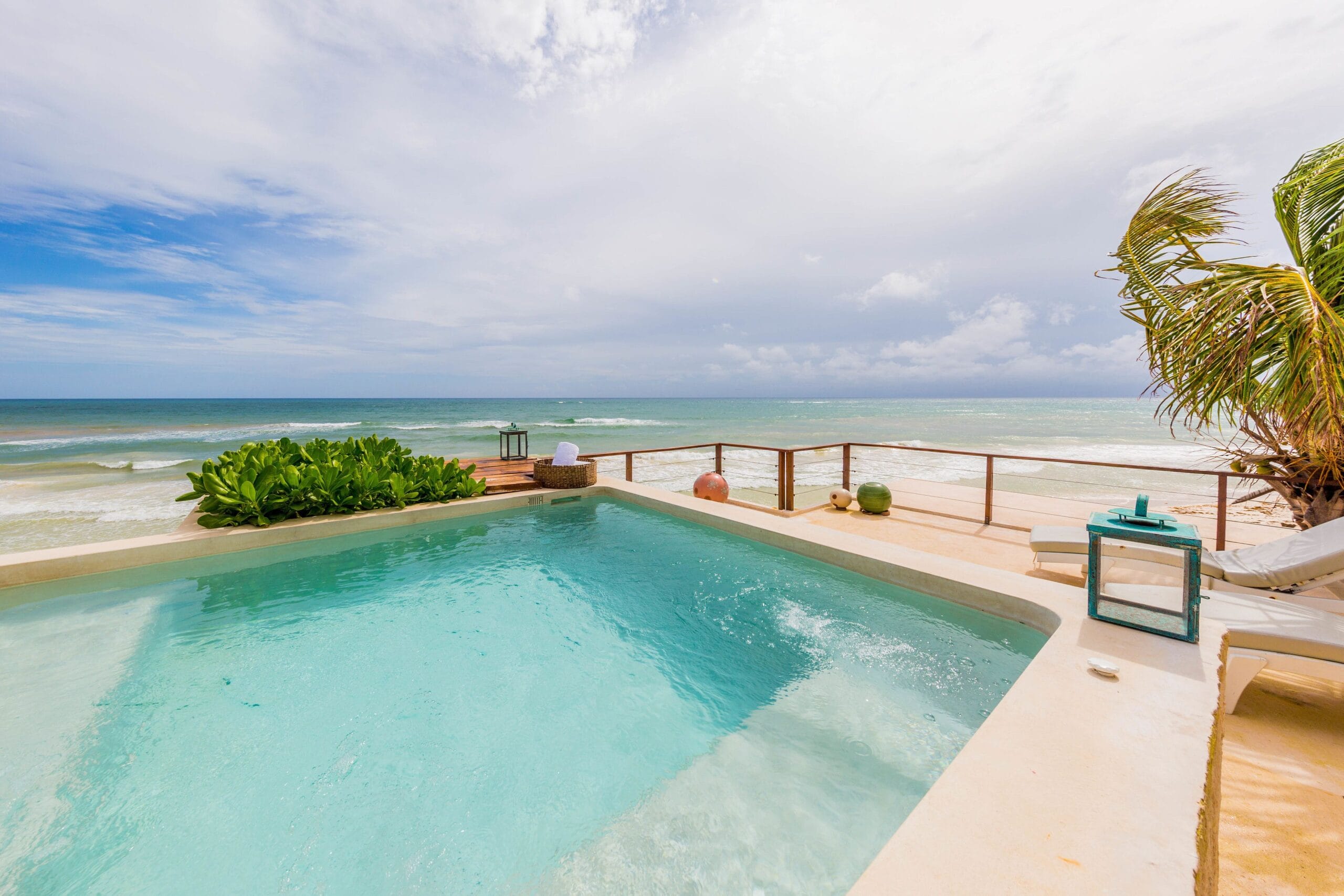

In Tulum, “private pool” nearly always means a plunge pool, and usually only in certain suites. It’s a beautiful thing, a small, cool, walled-in pool in your own garden or on your own patch of sand, but it’s for sinking into with a drink rather than swimming in. Book the wrong room category and you don’t get one at all. Only one hotel in our Tulum ranking, Hotel Bardo, gives every single suite a private plunge pool, and even that one is a plunge.
Los Cabos plays a bigger game. Private pools here range from plunge pools on a first-floor terrace to genuine private swimming pools and rooftop pools with loungers around them, and the top of the market solves the availability problem outright: at Waldorf Astoria Pedregal, all 112 rooms and suites come with a heated private plunge pool, so there’s no category to decode. Chileno Bay puts them in most accommodations, Montage names them right in the room title, and Four Seasons Costa Palmas gives one to every first-floor room and suite.
The honest gap is availability more than size. In Tulum you have to hunt for the room that genuinely includes a pool; in Los Cabos, at several resorts, you simply can’t book the wrong one.
The Beach and the Water
This is the round that surprises people, because both destinations have a real problem with their water and they’re opposite problems. Tulum’s sea is warm, shallow and genuinely swimmable, right up until the seaweed arrives. Los Cabos has some of the most beautiful coastline in Mexico, and a lot of it will kill you.
Tulum: swimmable, until the sargassum lands
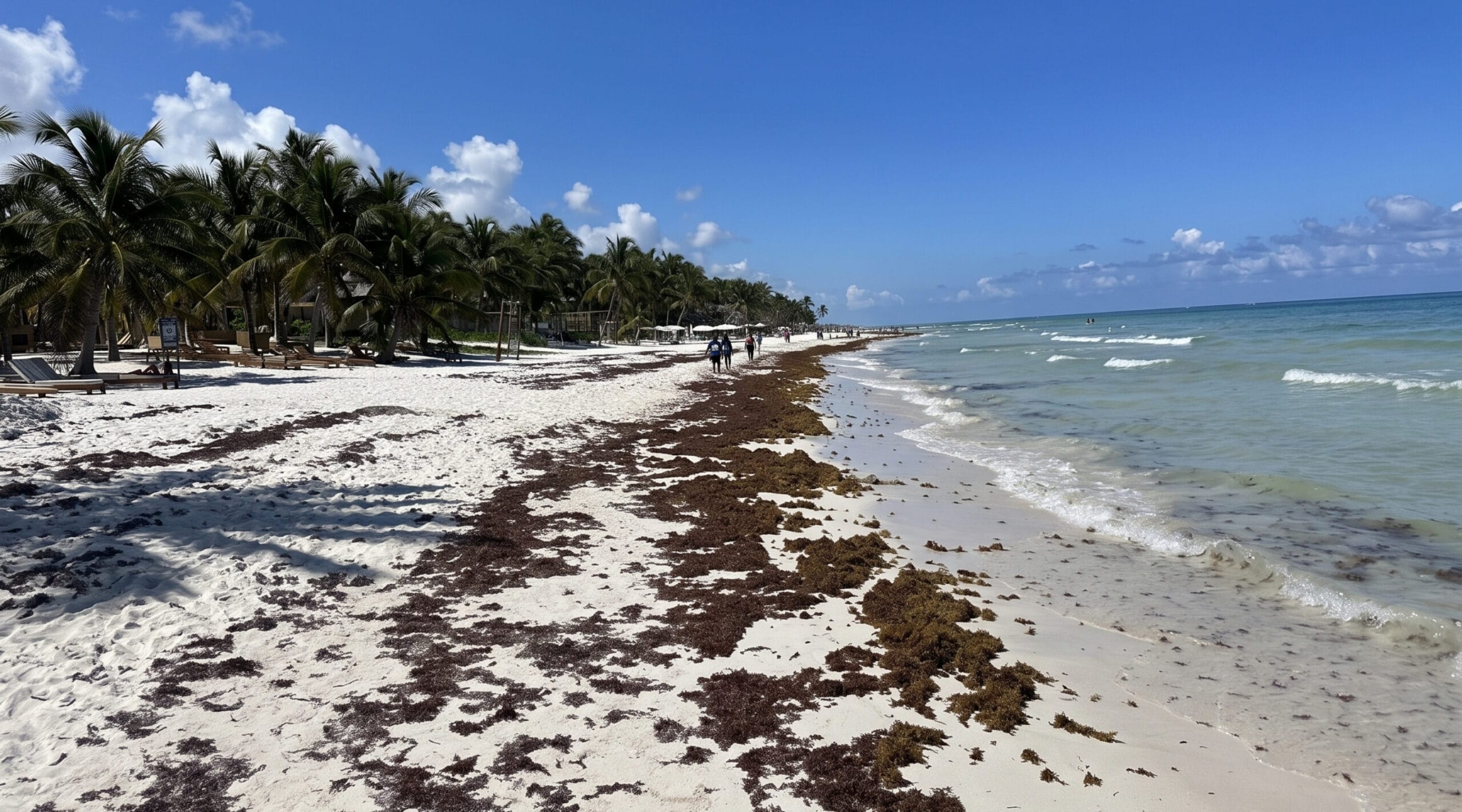
Tulum’s Caribbean is the postcard, bath-warm, pale turquoise, shallow enough to wade a long way out, backed by white sand. There’s no undertow drama and no red-flag culture; you just walk in. The catch is sargassum, the brown seaweed that drifts in from the Atlantic and piles onto these beaches roughly April through August. In a bad stretch it mats the shoreline and clouds the water at even the best beachfront hotels, and no resort fully controls it. It’s the single most common reason a Tulum trip disappoints, and it’s entirely seasonal.
Los Cabos: spectacular, and often unswimmable
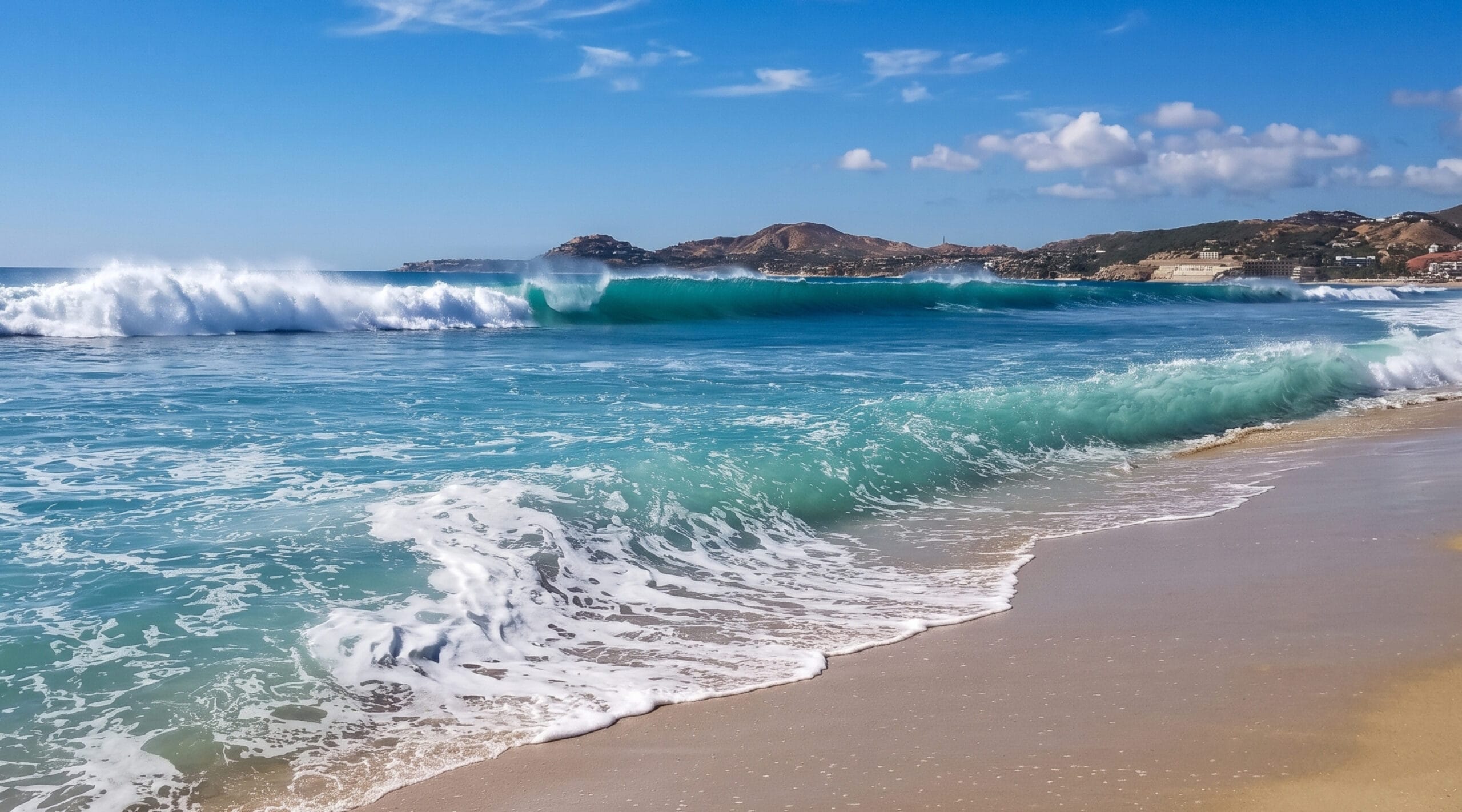
Cabo has no seaweed problem at all. What it has instead is surf. Where the Pacific meets the Sea of Cortez, strong currents and heavy shore break make large stretches of coastline unsafe to swim, including the Pacific side around Pedregal, where red flags are a permanent fixture rather than a bad-day warning. Plenty of famous Cabo beaches are for looking at, not swimming in, which is exactly why a private pool matters more here than almost anywhere in Mexico.
The protected exceptions are excellent, though, and they’re where the good resorts sit: Chileno Bay and Santa Maria Bay are calm, reef-fringed and the best snorkeling on this coast, Palmilla has its own swimmable beach, and Four Seasons Costa Palmas fronts two miles of swimmable sand, the largest stretch in Los Cabos. Book one of those and you get water Tulum can’t match, clear, deep blue, and reliable year round. Cabo also throws in something Tulum simply doesn’t have: gray and humpback whales migrating past from roughly December to April, visible from the shoreline and the terraces.
If you’re travelling between April and August, Los Cabos sidesteps Tulum’s biggest risk entirely. If you’re travelling between December and March, Tulum’s beaches are usually at their clearest, and Cabo adds whale season. That single fact decides this round more than any hotel does.
Vibe, Romance and Design
These two destinations are selling completely different fantasies, and this is the round where you’ll know instantly which one is yours.
Tulum: barefoot, candlelit, deliberately imperfect
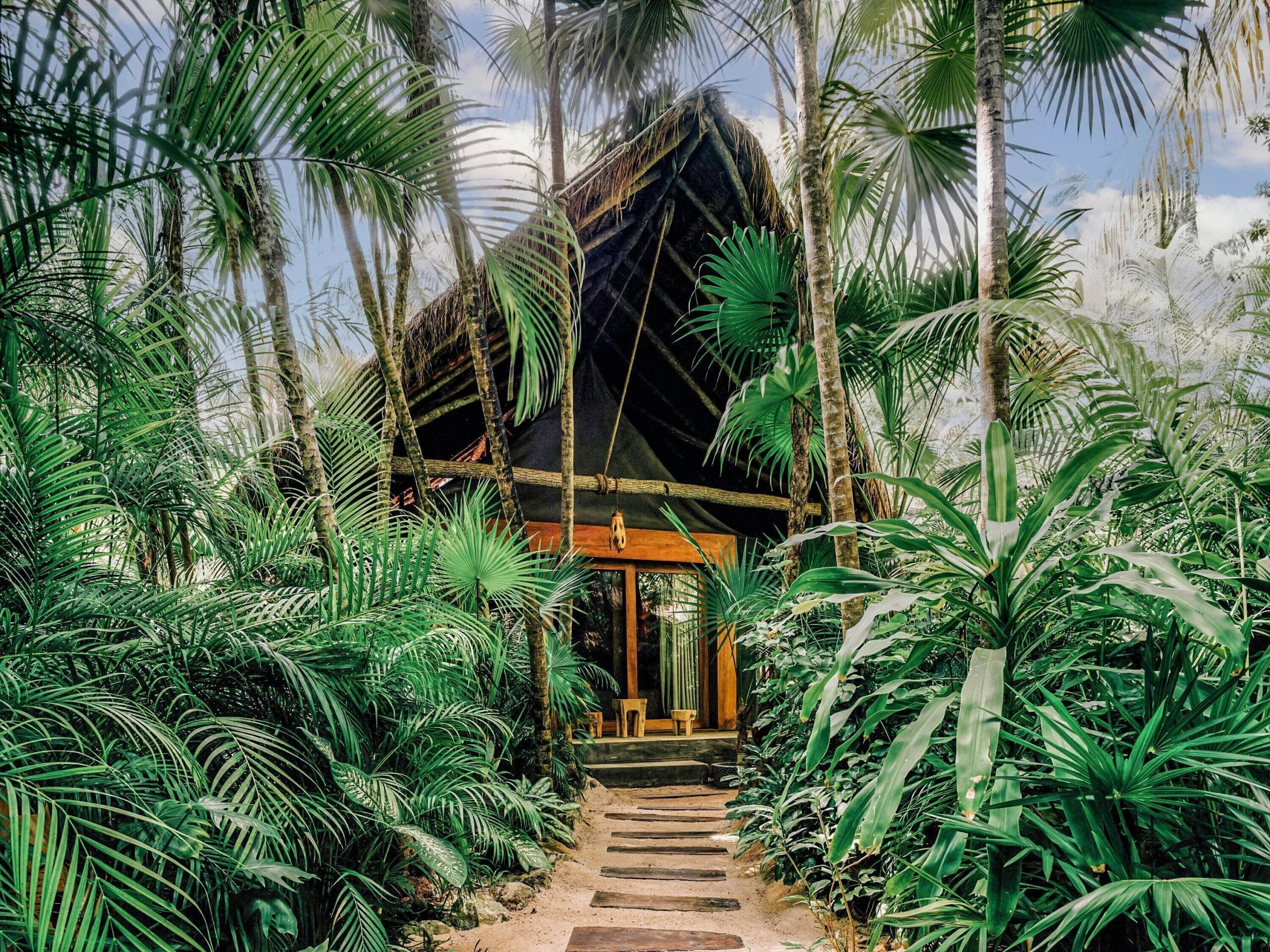
Tulum’s whole aesthetic is jungle-meets-artisan: macramé and raw wood, palapa roofs, concrete and greenery, candles instead of chandeliers, and hotels small enough that most have fewer than 40 rooms. It leans hard into intimacy, several of the best are adults-only, and it comes with genuinely unusual things to do around it, cenotes to swim in, Mayan ruins on the cliff above the sea, and a design scene that made this stretch of coast famous. It’s the more romantic destination by a distance, provided your idea of romance involves sand on the floor rather than a doorman.
Los Cabos: polished, dramatic, five-star
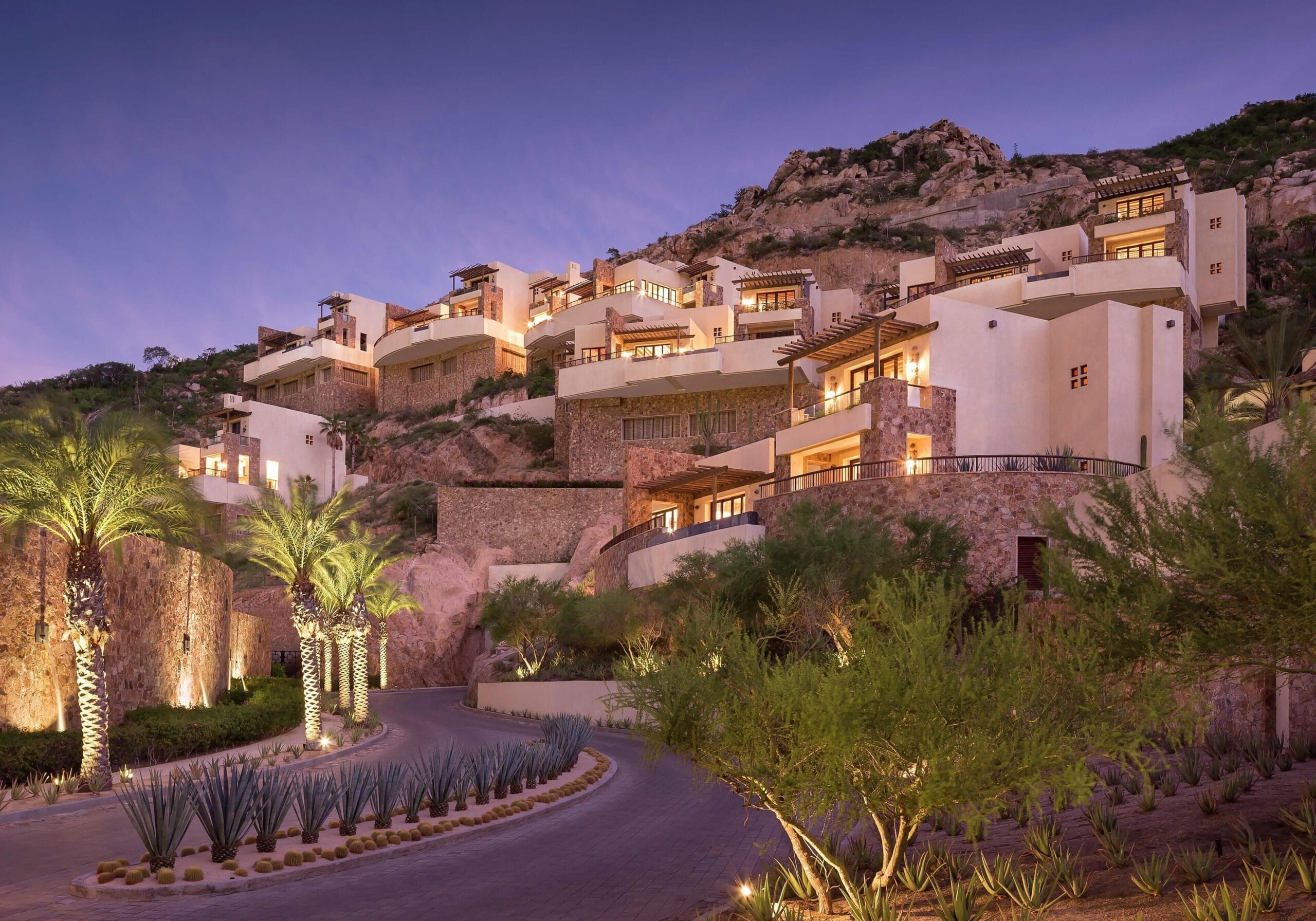
Cabo is the opposite kind of beautiful. This is desert running into ocean, granite cliffs and cactus, sunsets that turn the rock orange, and resorts run by the biggest names in luxury hospitality: Four Seasons, Rosewood, Auberge, Montage, Waldorf Astoria. The service is more polished, the buildings are grander, and the whole experience is more resort and less hideaway. It’s also far more family-capable, with kids’ clubs, teens’ clubs and multi-bedroom villas, alongside adults-only pools for couples who want quiet without booking an adults-only property.
The honest way to split them: Tulum is a place you go to feel somewhere, Cabo is a place you go to be looked after. One is a boho jungle hideaway with a cenote down the road; the other is a Forbes Five-Star resort on a cliff with a butler and a golf course.
What It Actually Costs
This is the least close round in the article. For the same thing, a private pool attached to your own room, Tulum costs a fraction of what Los Cabos does, and the gap is widest exactly where it matters most: at the honest end, where every room genuinely includes a pool.
| What you’re booking | Tulum | Los Cabos |
|---|---|---|
| A pool with every roomNo category to decode | From ~$300Hotel Bardo | From ~$1,200Waldorf Astoria Pedregal |
| Entry-level private pool roomSelect categories | From ~$300–350 | From ~$750–900 |
| Top-tier beachfront pool suite | ~$550–700La Zebra, La Valise | ~$1,200 and upCosta Palmas, Las Ventanas |
| Meals, drinks and taxis | Cheaper day to day | Closer to US pricing |
The pattern holds all the way down. In Tulum, around $300 a night buys you a suite at the highest-rated hotel on our list with a heated plunge pool in your own walled garden. In Los Cabos, $300 doesn’t get you a private pool at all at any of the resorts we ranked; the cheapest genuine private-pool option is roughly $750 a night, and that’s an all-inclusive three-bedroom villa you’d be splitting with another couple to make the maths work.
Day-to-day spending follows the same curve. Tulum’s beach-road restaurants are not cheap by Mexican standards, but they’re still well below Cabo’s resort dining, where you’re often eating on property because the good restaurants are on property. And because Cabo resorts are more self-contained, more of your holiday budget ends up spent inside the hotel.
One honest caveat in Cabo’s favor: you get more resort for the money. That $1,200 typically includes a Forbes Five-Star or Four Seasons level of service, multiple restaurants, a serious spa and a golf course. Tulum’s $300 buys atmosphere and a genuinely private pool, not that infrastructure. It’s cheaper because it’s smaller, not because it’s worse.
Flights and Getting Around
Nobody books a getaway for the transfer, but this round quietly shapes the first and last day of your trip, and the two destinations handle it very differently.
Los Cabos: shorter flights, easier ground
For most of the United States, Cabo is simply closer. From the West Coast it’s a short hop, roughly two to two and a half hours from Los Angeles, and there are direct flights from a long list of US cities into San José del Cabo (SJD). Once you land, the tourist corridor is a single well-maintained highway linking the airport, San José del Cabo and Cabo San Lucas, and most of the resorts we ranked sit directly off it, twenty to forty minutes from the terminal. Taxis and hotel cars are straightforward, and the resorts are self-contained enough that many couples never rent a car at all.
Tulum: a longer haul, and a transfer at the end of it
Tulum is easier from the East Coast and harder from everywhere west of it, and until recently everyone landed at Cancún and drove an hour and a half south. Tulum’s own airport (TQO) has changed that considerably, with a growing set of direct US routes putting you about thirty minutes from the hotel zone instead of ninety. It’s a genuine improvement, but Cancún still has far more flights, often cheaper ones, so plenty of travelers still land there and take the long transfer.
Getting around once you’re there is also more effort. Tulum’s beach road is a single narrow strip where taxis are expensive by Mexican standards and traffic crawls in high season, and most people end up cycling, walking, or negotiating a fare each time they want dinner. That’s part of the charm, but it’s charm with friction.
The honest exception in Cabo’s column: our number two pick, Four Seasons Costa Palmas, sits out on the East Cape, roughly forty-five minutes to an hour from the airport and about an hour and a half from Cabo San Lucas. Book that one and you’re choosing a stay-on-property holiday, which is wonderful, but it’s not the easy-access Cabo the rest of this round describes.
So Which One Is Yours?
Final tally: Los Cabos takes the pool and the logistics, Tulum takes the atmosphere and the price, and the beach round comes down to the month you travel. That’s an honest split, which means the right answer depends entirely on what you’re actually booking this trip for.
- You want boho design, candlelight and jungle over polish
- You’re travelling roughly December to March
- Adults-only intimacy appeals more than resort amenities
- You want cenotes and Mayan ruins on the doorstep
- A private plunge pool for around $300 a night decides it
- You want a private pool guaranteed with every room
- You’re travelling roughly April to August
- Five-star service and multiple restaurants matter
- You’re bringing family, or want a shorter flight
- Swimmable, snorkel-clear water is non-negotiable
If you genuinely can’t split them on feel, book by season. Travelling between April and August, choose Los Cabos and sidestep sargassum altogether. Travelling between December and March, choose Tulum for its clearest water, or Cabo if you’d like whales with your view.
And if the budget is the deciding factor rather than the mood, Tulum gives you a genuinely private pool for roughly a quarter of Cabo’s entry price, which buys you more nights, or a better suite, or both.