
Best Time to Visit Tulum for a Private Pool Villa (and How to Dodge the Seaweed)
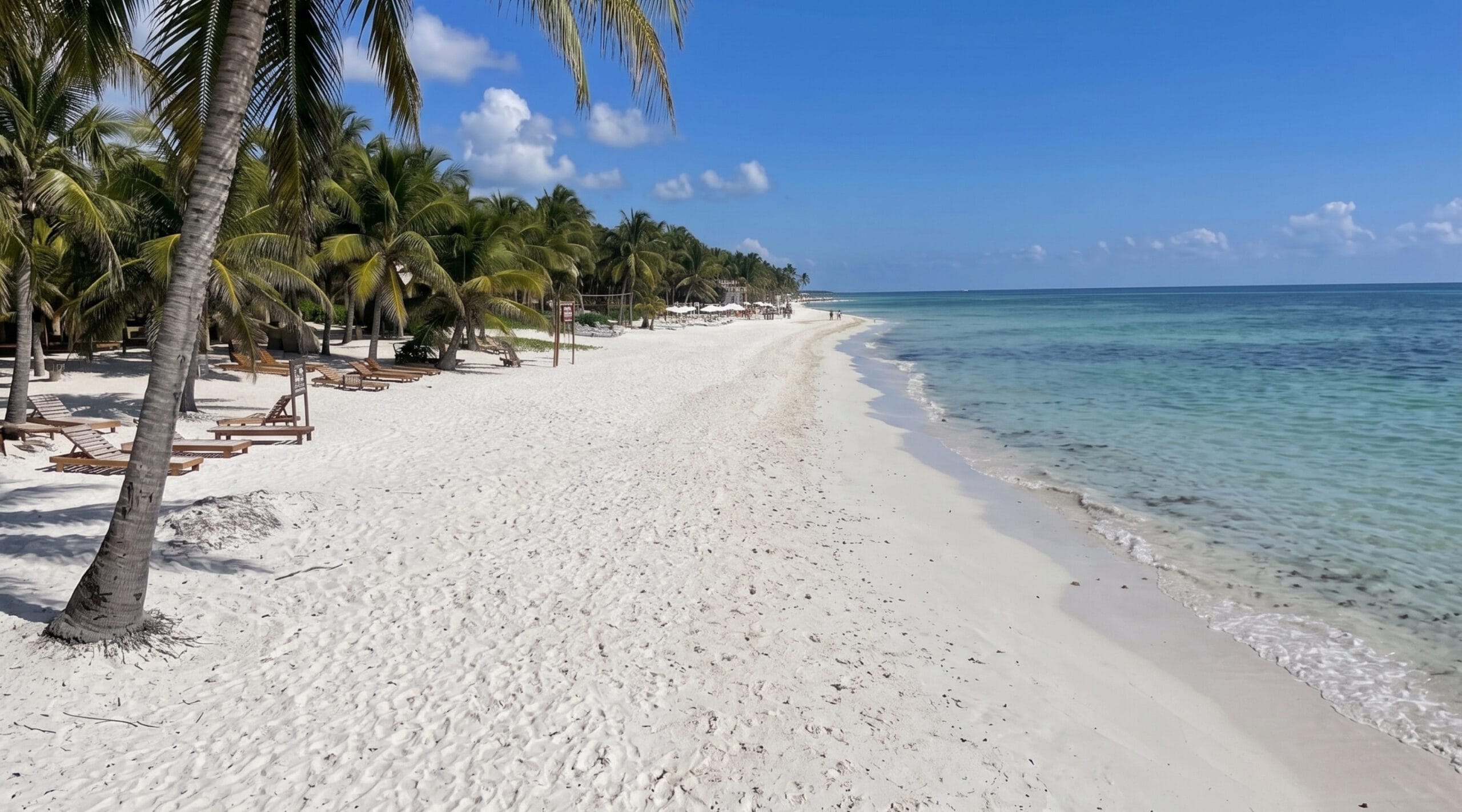
The best time to visit Tulum is November through early December for clear water, good weather and sane prices, or January and February if you want the driest days of the year. The rest of this guide covers what those months actually look like, when the seaweed arrives, and how to plan a brilliant trip even if your dates land in the middle of it.
This year has broken the usual pattern, so historical averages aren’t enough on their own. The University of South Florida is tracking 2026 as a potential record or near-record sargassum year, with roughly 33.6 million metric tons floating across the Atlantic and Caribbean in June, and the season started unusually early, with significant arrivals in January and again in March, months ahead of the typical April start. The calendar below still holds as a guide to the odds, but this is a year to check live conditions before you book and again before you travel.
Here’s the thing nobody tells you until you’ve already paid: Tulum is the single most exposed beach on this coast. Its shoreline runs almost due north to south and faces straight east into the open Caribbean, with no offshore reef close enough to deflect incoming mats and no sheltering bay to hide behind. That geography makes it the first major beach on the Riviera Maya to receive sargassum, and the last to clear. It’s also why timing matters more in Tulum than it does in Cancun or Cozumel.
None of which is a reason to skip it. Sargassum affects the open beach and the ocean, and nothing else. The cenotes are unaffected, the Mayan ruins are unaffected, the lagoon side of Sian Ka’an is unaffected, and your hotel pool is unaffected, which is a bigger deal than it sounds and something we come back to below. A seaweed-season trip planned properly is still a wonderful trip; a seaweed-season trip planned around a beach that isn’t there is the one that disappoints.
So this guide does two jobs. First, it tells you honestly which months give you the best odds of the Tulum in that photo, month by month. Second, it tells you exactly what to do if your dates are already locked into the risky window, including where to stay so the seaweed becomes an inconvenience rather than the story of your holiday.
Tulum Month by Month, at a Glance
Tulum is warm all year, so the real questions are rain, seaweed, crowds and price. Here’s how each month actually behaves, based on typical long-run patterns rather than any single year’s forecast.
| Month | Weather | Sargassum | Crowds & price | The verdict |
|---|---|---|---|---|
| January | Dry, warm days, cooler evenings | Low | Busy, high | Excellent water, peak prices |
| February | Driest month of the year | Low | Busy, high | The most reliable beach weather |
| March | Dry, hot, beautiful | Low to moderate | Very busy, high | Lovely, but spring break crowds |
| April | Hot, still mostly dry | Moderate | Easing after Easter | The transition month, it varies |
| May | Hot, humid, first rains | High | Quieter, better value | Good value, unreliable beach |
| June | Hot, humid, afternoon storms | Peak | Moderate, lower prices | Cenote season, not beach season |
| July | Hot, humid, afternoon storms | Peak | Busy with families, mid prices | Heaviest seaweed of the year |
| August | Hottest and most humid | High | Busy, mid prices | Plan around the beach, not for it |
| September | Wettest month, storm risk peaks | Moderate | Emptiest, cheapest | Best prices, biggest gamble |
| October | Rain easing, storm risk lingers | Moderate, easing | Quiet, cheap | Great value if you’re flexible |
| November | Dry season returns, gorgeous | Low | Moderate, still reasonable | The best all-round month |
| December | Dry, warm, bright | Low | Calm until the 15th, then chaos | Superb early, expensive late |
Sargassum levels are typical seasonal patterns, not forecasts. Seaweed varies year to year and week to week, and 2026 has already broken the usual rhythm with early arrivals in January and March. Always check current conditions close to your dates.
Dry-season weather has arrived, seaweed is near its annual low, and prices sit below the holiday peak. Early December runs a close second, right up to about the 15th.
The driest month of the year and historically among the clearest for water. You pay peak-season rates for the privilege, so book early.
Rates drop sharply and the crowds thin out. You’re accepting some rain and lingering storm risk, but the seaweed is usually on its way out.
One pattern worth noticing in that table: the months with the clearest water are also the busiest and priciest, and the months with the best deals are the ones where the beach is least dependable. That trade-off is the whole game in Tulum, and it’s why the next two sections matter, because you can absolutely have a great trip in the cheap months if you plan the right way.
When Is Sargassum Season in Tulum?
Sargassum season in Tulum runs roughly from May through August, with June and July the heaviest months, and it’s usually at its lightest from November through February. Those are the odds most years, and they’re the numbers to plan around, but the honest version comes with a caveat: this is weather, not a timetable, and it shifts.
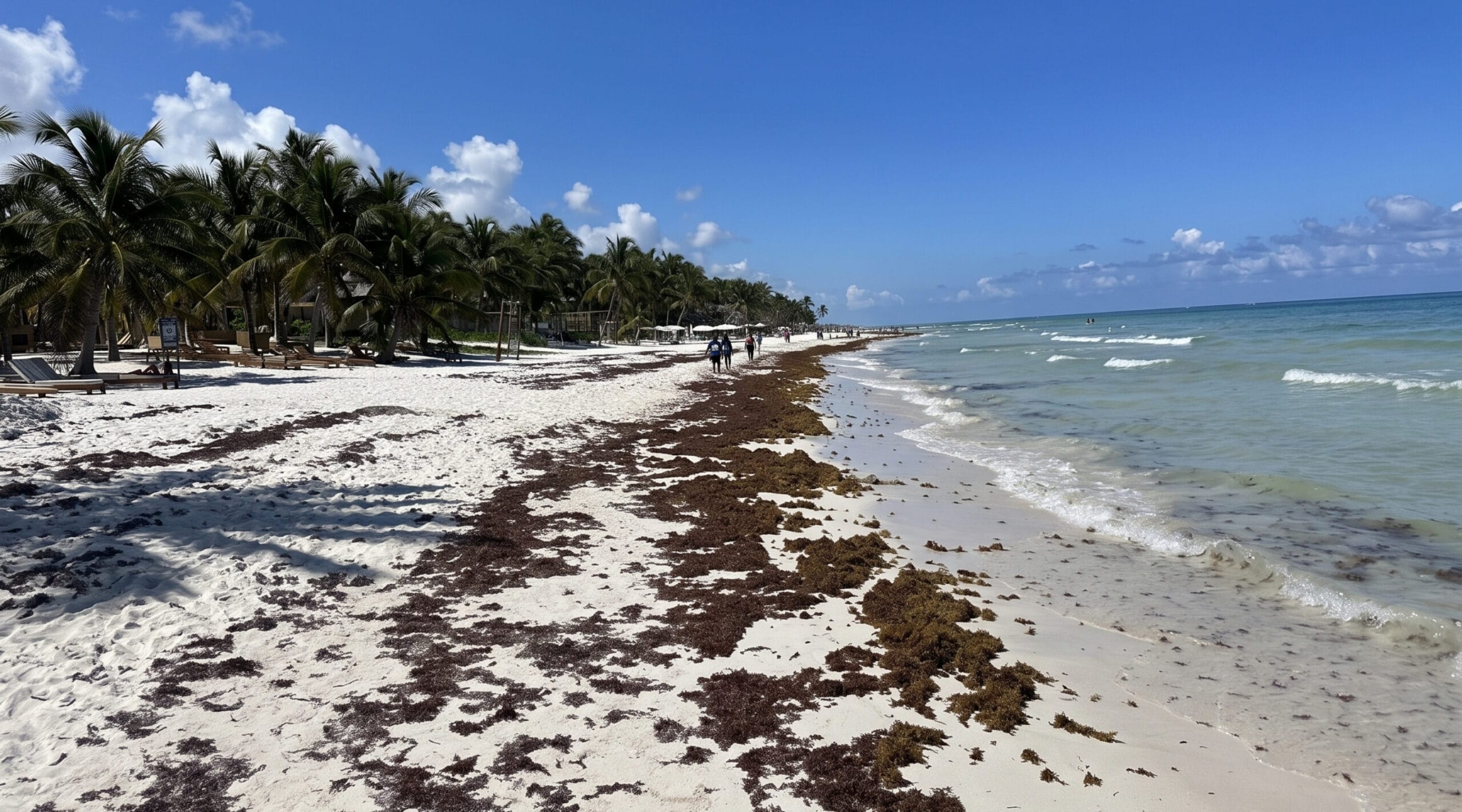
What sargassum actually is
Sargassum is a free-floating brown seaweed that grows in enormous mats out in the Atlantic and drifts west on ocean currents until it reaches Caribbean coastlines. It’s entirely natural and it isn’t pollution, but in large volumes it piles up on the sand, clouds the water, and gives off a sulfur smell as it decomposes. Small amounts are barely noticeable. A heavy landing is not subtle.
Why Tulum gets hit harder than its neighbors
Geography, and it’s worth understanding because it explains why advice written about Cancun doesn’t apply here. Tulum’s coastline runs almost due north to south and faces directly east into the open Caribbean. There’s no offshore reef close enough to deflect incoming mats, no sheltering bay, and no island sitting to the windward side. Sitting at the southern end of the Riviera Maya, Tulum is consistently among the first beaches to receive sargassum and among the last to clear. Cancun’s north-facing hotel zone, Isla Mujeres and Cozumel’s west coast all sit in far more protected positions.
It arrives in waves, not as one long blockade
This is the part most guides get wrong, and it’s genuinely good news. Sargassum doesn’t roll in and stay for four months. It arrives in pulses driven by wind and current, which means conditions can change within a single day: a beach that looks heavy at seven in the morning can be substantially cleared by midday once crews have removed the overnight deposit. It also means a week in peak season can be perfectly lovely, and a week in a historically clear month can catch a surprise pulse. Plan for the odds, then check the reality.
The University of South Florida is tracking 2026 as a potential record or near-record season, with roughly 33.6 million metric tons of sargassum floating across the Atlantic and Caribbean as of June, putting it near or above the previous record year. Warm Atlantic sea-surface temperatures and high nutrient loads are the drivers.
What matters more for planning is the timing: significant arrivals turned up in January and again in March, months ahead of the usual April start. That doesn’t make the winter window worthless, it’s still the best bet you have, but it does mean the historical calendar is a starting point this year rather than a guarantee. Check live conditions before you book and again in the days before you fly.
- Cenotes. Freshwater sinkholes inland, crystal clear all year, and Tulum has some of the best in Mexico
- Your hotel pool. Seaweed is an ocean phenomenon; a pool is a pool, in any month
- The Mayan ruins. Tulum’s clifftop site, plus Cobá and Ek Balam inland
- The Sian Ka’an lagoon. The lagoon side of the biosphere stays clear even when the ocean beaches don’t
- Restaurants, spas and the town. Everything Tulum is loved for beyond the sand
That list is the reason a seaweed-season trip is a planning problem rather than a lost cause. If your dates are locked into the risky window, the next section is the one that matters.
How to Dodge the Seaweed
If you can choose your dates freely, the advice is simple: go between November and February. But most people can’t. School holidays, work, weddings and flight prices decide these things, and plenty of readers land here with dates already booked in June. Here’s how to make that trip a good one anyway.
Check the real forecast, not last year’s blog post
Two sources are worth your time. The University of South Florida’s Optical Oceanography Lab publishes the satellite-based Atlantic outlook, which tells you how much seaweed is out there and roughly where it’s heading, and it’s the source everyone else is quoting. For day-to-day reality, the local Facebook groups and beach-condition trackers post daily photos and colour-coded status by beach.
Check both twice: once before you book, to read the season’s trend, and again in the few days before you fly, so you know what you’re walking into.
Look at recent photos, not hotel marketing shots
Every hotel’s website shows a flawless beach, because those photos were taken on a flawless day, possibly years ago. The honest picture comes from location tags and recent guest posts on Instagram, and from the newest reviews rather than the highest-rated ones. Reviews from the past two weeks in your travel month tell you more than any brochure.
Book somewhere the beach isn’t the only plan
This is the single biggest lever you have, and it’s why the next section exists. A hotel with a genuinely private pool, a cenote on site, or an inland setting turns seaweed from a holiday-ruining problem into something you notice on one walk and then forget about.
Go to the beach in the morning
Sargassum arrives in overnight pulses, and the better hotels and beach clubs rake at dawn. That means the same stretch of sand can look heavy at seven and be clear by ten. If a beach day matters, take it early rather than after lunch, and ask your hotel when their crew works.
Swim somewhere else entirely
This is the part that saves seaweed-season trips, and it’s genuinely wonderful rather than a consolation prize. Tulum sits on top of one of the world’s great cenote systems, and none of it is touched by what’s happening in the ocean.
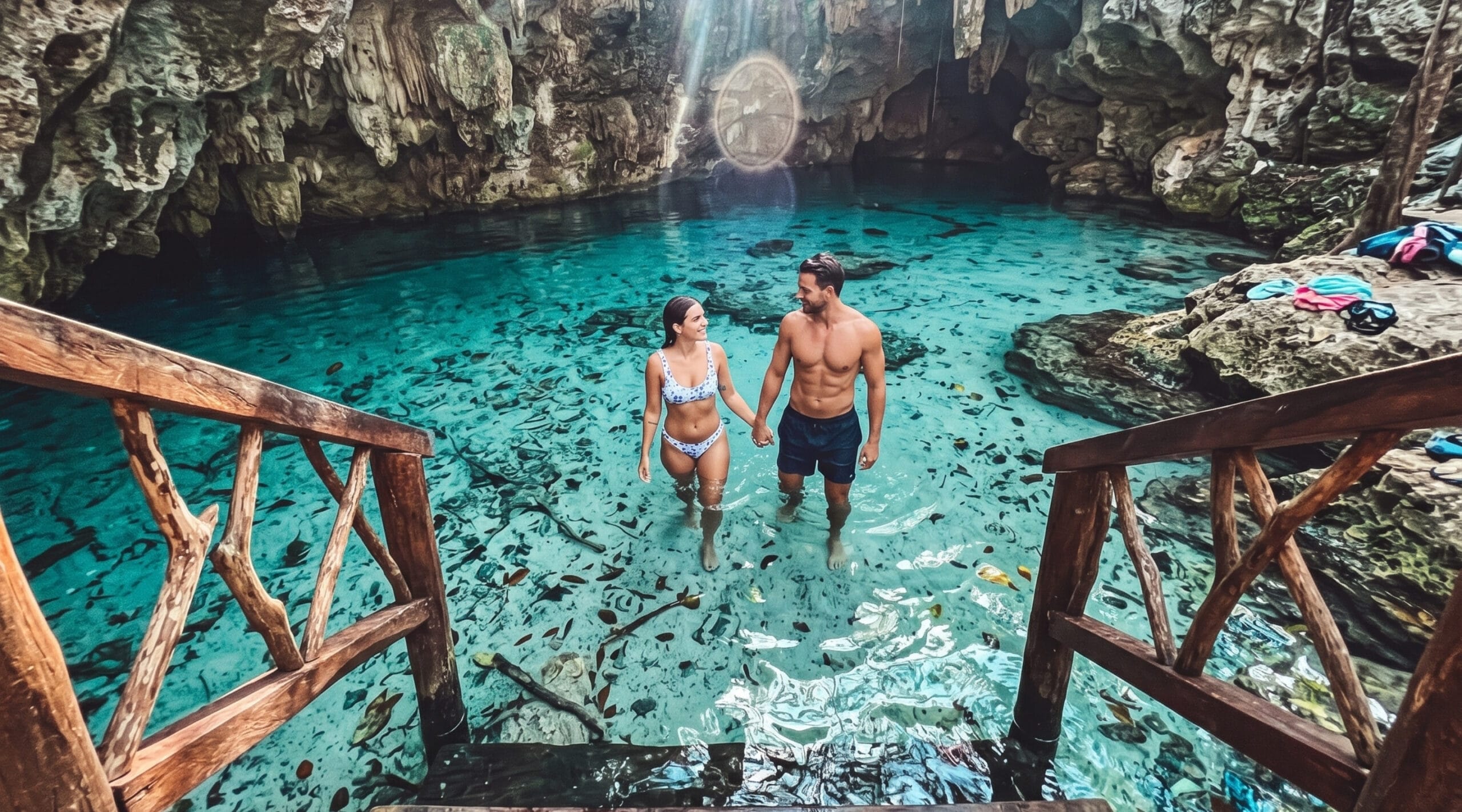


- Cenotes. Gran Cenote, Dos Ojos and Cenote Calavera are all within a short drive, and the water is clear year round
- The Sian Ka’an lagoon. The lagoon side of the biosphere reserve stays clear even when the ocean beaches don’t
- Protected coves up the coast. Akumal and Soliman Bay sit in sheltered positions and often fare better than Tulum’s open beachfront
- Cozumel’s west coast. Faces away from the Atlantic currents, and it’s a day trip from Playa del Carmen
- Your own pool. The most reliable water in Tulum, in any month
No hotel controls the ocean, and any property promising you a guaranteed seaweed-free beach is overselling. What good hotels genuinely do is rake early and often, and give you enough else to enjoy that a heavy morning doesn’t derail the day. Judge them on that, not on their photos.
Do those five things and a June trip to Tulum looks a lot like a January one, with cheaper rates and fewer people in the frame. The next section covers where to stay so that’s actually true.
Where to Stay in Seaweed Season
If your dates land between May and August, the smartest thing you can do is book somewhere the beach isn’t the whole plan. These three all sit away from Tulum’s open beachfront, which means what’s happening in the ocean simply doesn’t reach them, and each one gives you somewhere excellent to swim regardless.

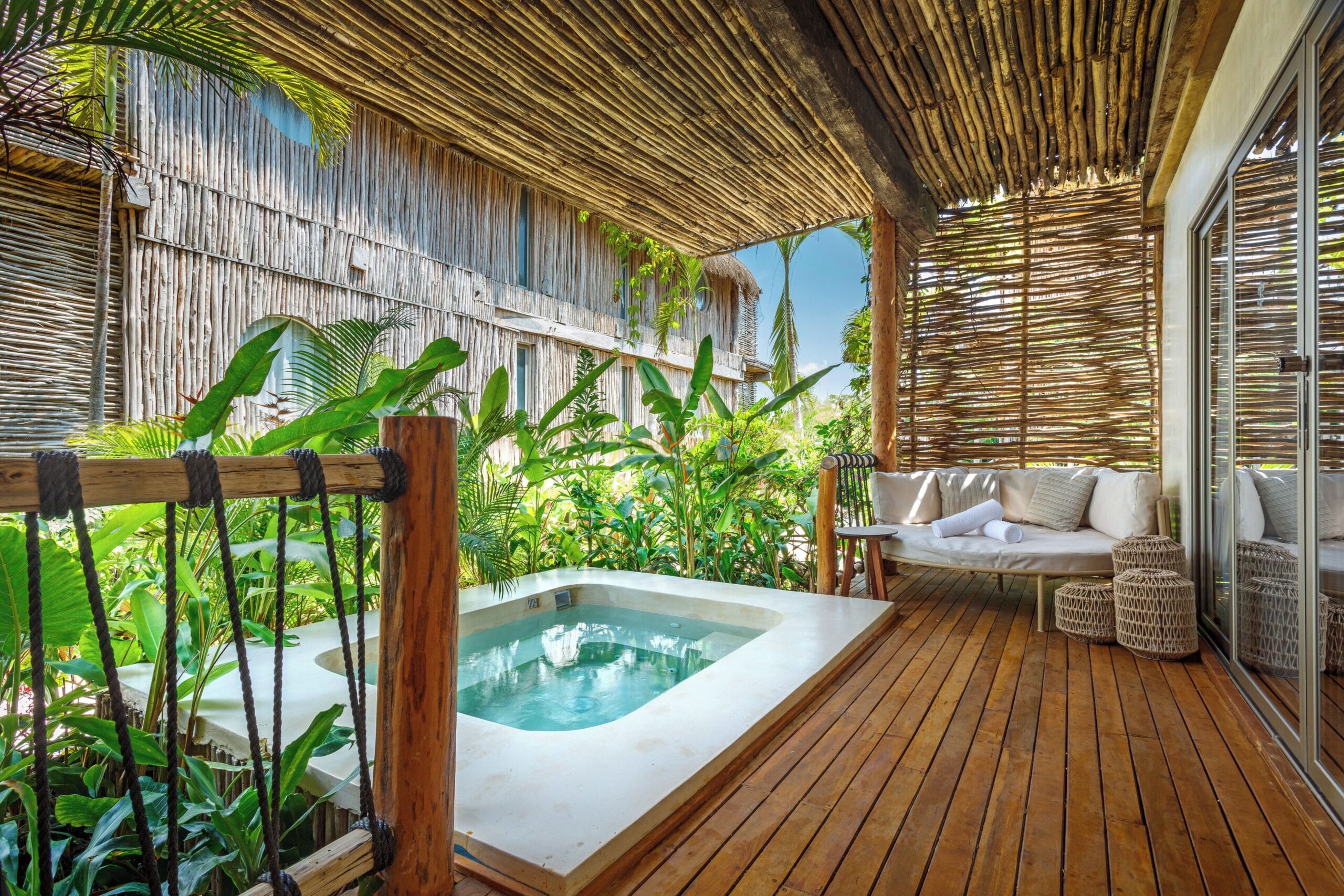
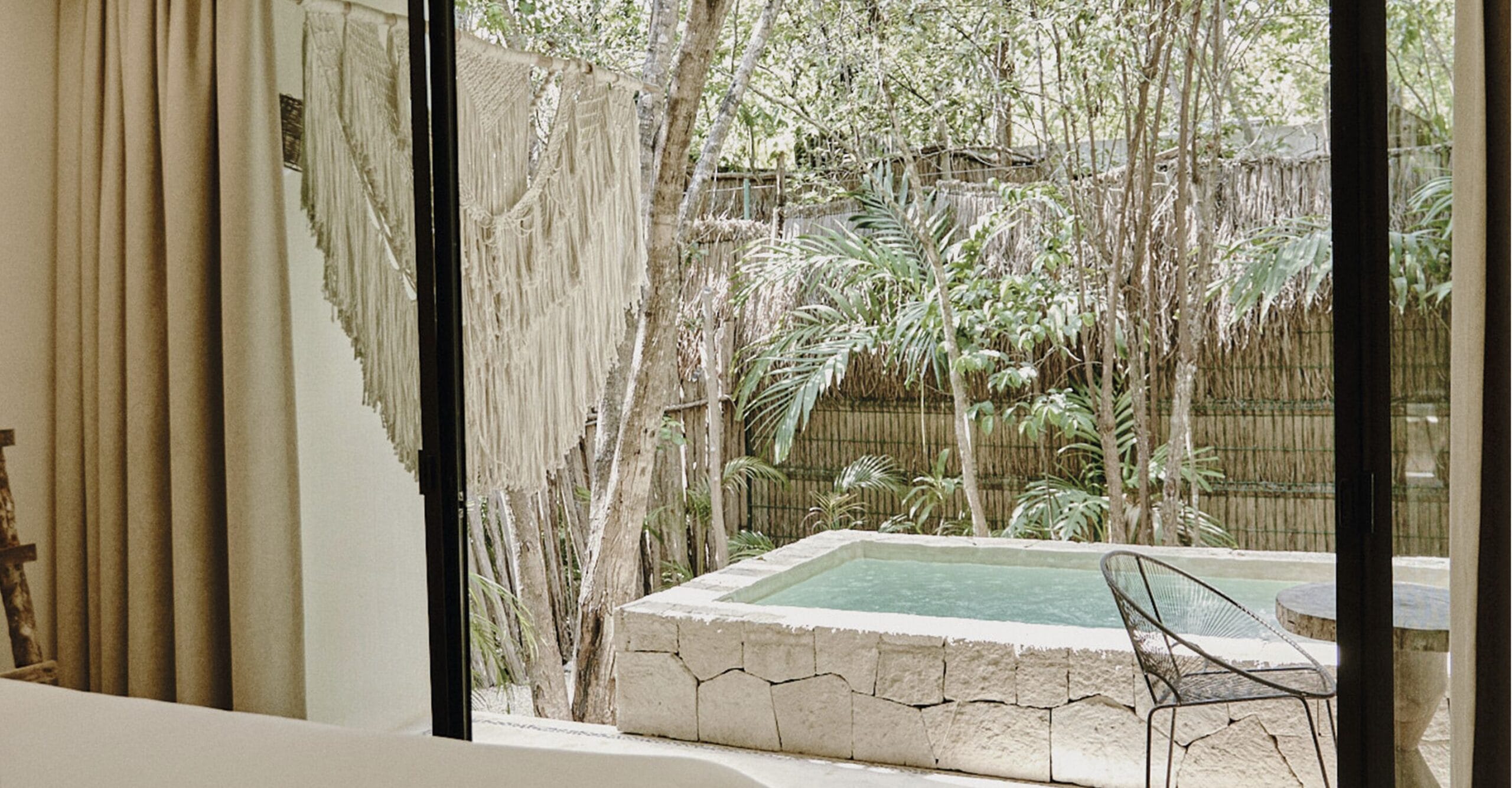
Hotel Bardo
From ~$300/nightBardo sits in Tulum Centro rather than on the beach, and every one of its 30 adults-only suites comes with its own private heated plunge pool in a walled garden. That combination is exactly what you want in June: nothing about your stay depends on the ocean, and you never have to check a beach report before deciding what to do with your morning. It’s also the highest-rated hotel on our Tulum list, and remarkable value for a room where the pool is guaranteed.
Check rates on Expedia →Hotel Shibari
From ~$350/nightShibari is the one hotel on our list where the alternative swimming is on the property. Its natural cenote is the thing guests rate most highly about the whole stay, above the suites and above the restaurant, and it’s completely unaffected by what the sea is doing. Add a private plunge pool in the deluxe categories and an adults-only, design-led setting in the jungle within the Hotel Zone, and a seaweed-heavy week barely registers.
Check rates on Expedia →Una Vida
From ~$300/nightUna Vida sits inland in the quiet La Veleta neighborhood, far enough from the coast that the beach question never comes up. You get villa-style rooms with far more space than anything on the sand, and the pool categories come with a private plunge pool in your own walled garden. As Bardo’s sister property next door, guests can use both hotels’ pools, which is a genuinely useful perk when the ocean is off the menu.
Check rates on Expedia →Why a Private Pool Changes the Math
Here’s the shift that makes a summer trip to Tulum work. If the beach is your only place to swim, then sargassum decides whether your holiday is good or ruined, and you spend the week refreshing a seaweed tracker. If you have your own pool, the beach becomes one of several options, and a heavy morning is something you notice on a walk rather than the story of your trip.
That’s the honest case for booking a private pool villa in Tulum specifically, more so than in almost any other beach destination in Mexico. You aren’t paying for a luxury you’ll use twice. You’re removing the one variable nobody controls.
It also changes which hotels are worth your money. In the clear months, a beachfront room with a plunge pool that opens onto the sand is the best of both worlds. In the risky months, an inland suite with a genuinely private pool quietly outperforms a beachfront room without one, and usually costs less. That’s the opposite of how most people book, and it’s the single most useful thing in this guide.
One caveat worth repeating from our Tulum private pool ranking: in Tulum, “private pool” almost always means a private plunge pool, and at most hotels only certain room categories include one. Book the exact room that names a pool rather than assuming, or you’ll arrive to a lovely terrace and no water on it.
Hurricane Season, Honestly
Atlantic hurricane season officially runs from June through November, with the highest risk from August into October. That sounds alarming on a calendar and matters less in practice than most people expect, but it’s worth understanding rather than ignoring.
| Period | What it actually means |
|---|---|
| June to July | Season is open but direct risk is low. The bigger summer issue in Tulum is sargassum, not storms. |
| August to October | Peak risk window, and September is the wettest month of the year. Direct hits on Tulum remain uncommon, but disruption is more likely. |
| November | Season technically continues, but risk drops sharply and the weather turns lovely. One of the best months to visit. |
The practical reality: a direct hurricane strike on Tulum is rare, and the far more common effect is a flight cancelled or delayed by a storm system that never actually reaches your hotel. Wet-season rain also isn’t the all-day washout people imagine, it’s usually an afternoon downpour that clears in time for dinner.
If you’re travelling between August and October, two things are worth doing: buy travel insurance that covers weather disruption, and book flights and hotels with flexible cancellation. Do both and shoulder-season prices become genuinely good value rather than a gamble.